Whole House Generator Cost Installed Breakdown
Discover the true whole house generator cost installed in 2026. We break down equipment, labor, typical adders, and negotiation tips for your project.
A realistic whole house generator cost installed in 2026 typically ranges from $10,000 to $18,000 for a complete 14 kW to 22 kW standby system. That all-in figure includes the generator, automatic transfer switch, fuel hookup, electrical work, permits, site preparation, and labor.
The generator cabinet gets most of the attention because it's the easiest item to price online. It's also the least reliable way to budget the project. The final invoice is shaped by the infrastructure around the machine, especially the gas run, transfer switch, electrical connection, pad, permitting, and labor required to make everything work safely together.
I've reviewed enough residential installation scopes to know where homeowners get caught off guard. A low equipment price can become an expensive project when the panel is outdated, the gas meter sits far from the proposed location, or the installer has to route conduit through finished areas. The right question isn't “What does the generator cost?” It's “What will it take to integrate this generator with my house?”
Table of Contents
- A Practical Benchmark for Whole House Generator Cost Installed
- Breaking Down the Balance of System Expenses
- How Site Complexity Multiplies Labor Hours
- Typical Adders That Inflate Your Final Quote
- Navigating Regional Variations and Market Shifts
- Strategies to Compare Quotes and Negotiate Effectively
- Finding Verified Installers for Your Specific Project
A Practical Benchmark for Whole House Generator Cost Installed
Current installed-cost guidance places a typical U.S. whole-house standby project around $10,000 to $18,000, according to mainstream whole-house generator cost guidance. Use that figure as a project benchmark, not a cabinet price. It reflects the equipment and the work required to connect it safely to the home.
A separate 2026 benchmark places installed whole-house systems around $8,000 to $16,000, with premium 20 kW and larger systems often exceeding $15,000. Its scope includes the generator, automatic transfer switch, electrical work, fuel-line connections, permits, and site preparation, as described in this 2026 installed-cost benchmark for whole-house generators.
The overlap between those ranges gives buyers a workable planning baseline. For a straightforward 14 kW to 22 kW system, I would begin near the middle of the available guidance, then add room for difficult access, longer utility runs, panel upgrades, or local inspection requirements.
Why the cabinet price misleads buyers
Retail listings usually isolate the generator itself. They may exclude the transfer switch, wiring, gas connection, mounting pad, permits, inspections, and labor coordinating electrical and fuel work. A low equipment price can therefore signal an incomplete scope, not a lower project cost.
The final invoice pays for integration. The contractor must place the unit correctly, connect it to the electrical service, supply adequate fuel, meet local code, test the transfer sequence, and leave the site ready for inspection. Gas distance, conduit routing, panel condition, and access to the work area often determine labor more than the generator brand does.
Budget rule: Treat any cabinet-only price as an equipment reference, not as your project budget.
Sizing also affects the installed total. Square footage alone cannot determine capacity. HVAC startup loads, electric water heating, well pumps, cooking equipment, medical devices, and other high-demand circuits may require a larger system, a load-management setup, or more electrical work. Complete a qualified load calculation and review how to choose the right generator size before comparing brands or bids.
The useful comparison is quote against quote, with every balance-of-system item listed. A complete scope gives you a defensible budget and exposes omissions before they become change orders.
Breaking Down the Balance of System Expenses
The generator is the power source, but the balance of system is what connects that source to your home. A complete residential project commonly includes the generator, automatic transfer switch, pad, fuel connection, wiring, disconnects, grounding, permits, and inspection coordination. Whole-house generator installation cost guidance identifies these components as central parts of the installed total.
The table below shows how to read the major portions of a quote. The ranges aren't a promise for every property. They're planning references that help you identify which items are relatively predictable and which ones depend heavily on site conditions.
Typical Installed Cost Breakdown
| Component | Estimated Cost Range | Primary Cost Driver |
|---|---|---|
| Generator unit | Included in overall project total | Output capacity, brand, fuel type, warranty, and enclosure |
| Automatic transfer switch and electrical gear | About $500 to $3,000 or more | Amperage, service-rated design, load management, and panel configuration |
| Installation labor | About $3,000 to $7,000 for many projects | Access, conduit length, fuel routing, panel work, and inspection requirements |
| Generator pad or base | Varies by site and material | Soil stability, drainage, grading, and local placement rules |
| Fuel-line connection | Varies by route and utility condition | Distance from meter or tank, pipe sizing, trenching, and utility upgrades |
| Wiring and panel integration | Included within the electrical scope | Panel capacity, circuit arrangement, wire length, and code corrections |
| Permits and inspections | Usually a smaller portion of the total | Local jurisdiction, permit types, and required inspections |
The transfer switch deserves close attention because it does more than automate the changeover. It isolates the home from utility power and allows the generator to serve the electrical system safely. A quote should identify whether the design uses whole-service backup, essential-load circuits, a service-rated switch, or load management equipment. Read the transfer switch installation guide if a contractor's proposal uses unfamiliar terminology.
Read the quote by function, not by brand
Two contractors can specify the same generator and still produce different totals. One may include a complete electrical connection, permit handling, and a finished pad. Another may list the cabinet and transfer switch, then leave fuel work, concrete, and utility coordination as allowances or exclusions.
Look for separate lines for equipment, transfer switch, labor, fuel work, electrical work, pad, permits, inspection, and restoration. If those categories are missing, you can't tell whether the contractor is offering a lower price or omitting work that will appear later as a change order.
The machine should be evaluated for capacity, warranty, service support, and fuel compatibility. The balance of system should be evaluated for completeness and site fit. Both matter, but the infrastructure is where identical equipment often produces dramatically different invoices.
How Site Complexity Multiplies Labor Hours
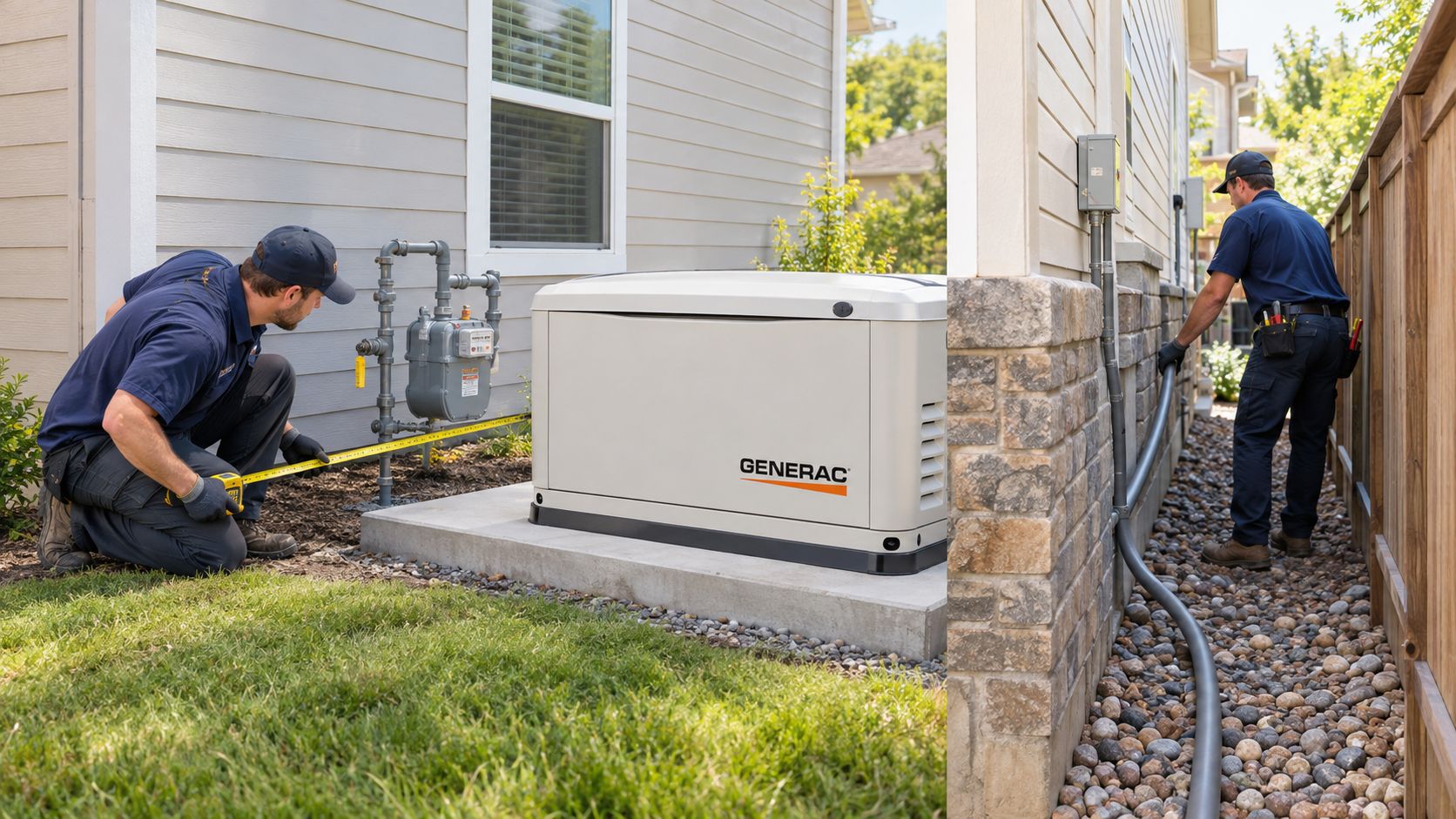
Labor changes fastest when the crew has to solve physical problems on site. A generator near the electrical panel and gas meter may require a clean, direct installation. A unit placed across a finished yard, behind a narrow gate, or far from the service equipment creates more trenching, conduit, excavation, fittings, surface repair, and coordination.
Walk the property before requesting bids
Start outside at the proposed generator location. Check the distance to the electrical service, gas meter, propane equipment, doors, windows, vents, property lines, and areas where water collects. Then inspect the likely path for conduit and fuel piping. A route that crosses a driveway, retaining wall, mature landscaping, or finished patio will take longer than an unobstructed path.
Homeowners should also look at access. Can the crew bring materials and equipment through the side yard? Is the gate wide enough? Will the installer need to remove fencing, hand-carry materials, protect hardscape, or work around an occupied area? Those details may not appear in an online estimate, but they affect crew hours and restoration work.
Long fuel runs create both material and labor exposure. The pipe must be correctly sized for the generator's demand, installed at the required depth or configuration, protected where necessary, and tested. Electrical conduit faces the same issue. Longer routes require more trenching, bends, fittings, wire, and surface repair.
Panel work is a separate risk category
An older or undersized service panel can turn a routine connection into a larger electrical project. The installer may need to rearrange circuits, add a subpanel, replace obsolete equipment, correct grounding or bonding, or modify the service connection. These changes aren't cosmetic. They determine whether the generator can transfer power safely and whether the installation passes inspection.
The generator installation process shows why site assessment should happen before equipment ordering. The crew has to coordinate placement, electrical integration, fuel work, permits, testing, and commissioning, not just set a cabinet on a pad.
A standard installation may keep labor near $1,500 to $5,000, while complex projects involving 20 kW or larger units, long conduit or gas runs, or service-panel modifications can reach $5,000 to $12,000 in labor alone, according to residential generator labor-cost guidance. Permit and inspection charges are usually modest compared with the project total, often a few hundred dollars and generally well under 5% of the installed price, from the same source.
Use this video as a visual reference for the physical work involved, but rely on a site-specific written proposal for your budget.
Typical Adders That Inflate Your Final Quote
Most surprise costs come from requirements that weren't visible during the first phone call. Contractors discover them during the site visit, utility review, load calculation, or permit process. Some are legitimate safety or code requirements. Others are optional upgrades. Your job is to make the distinction before signing.
Electrical and transfer equipment
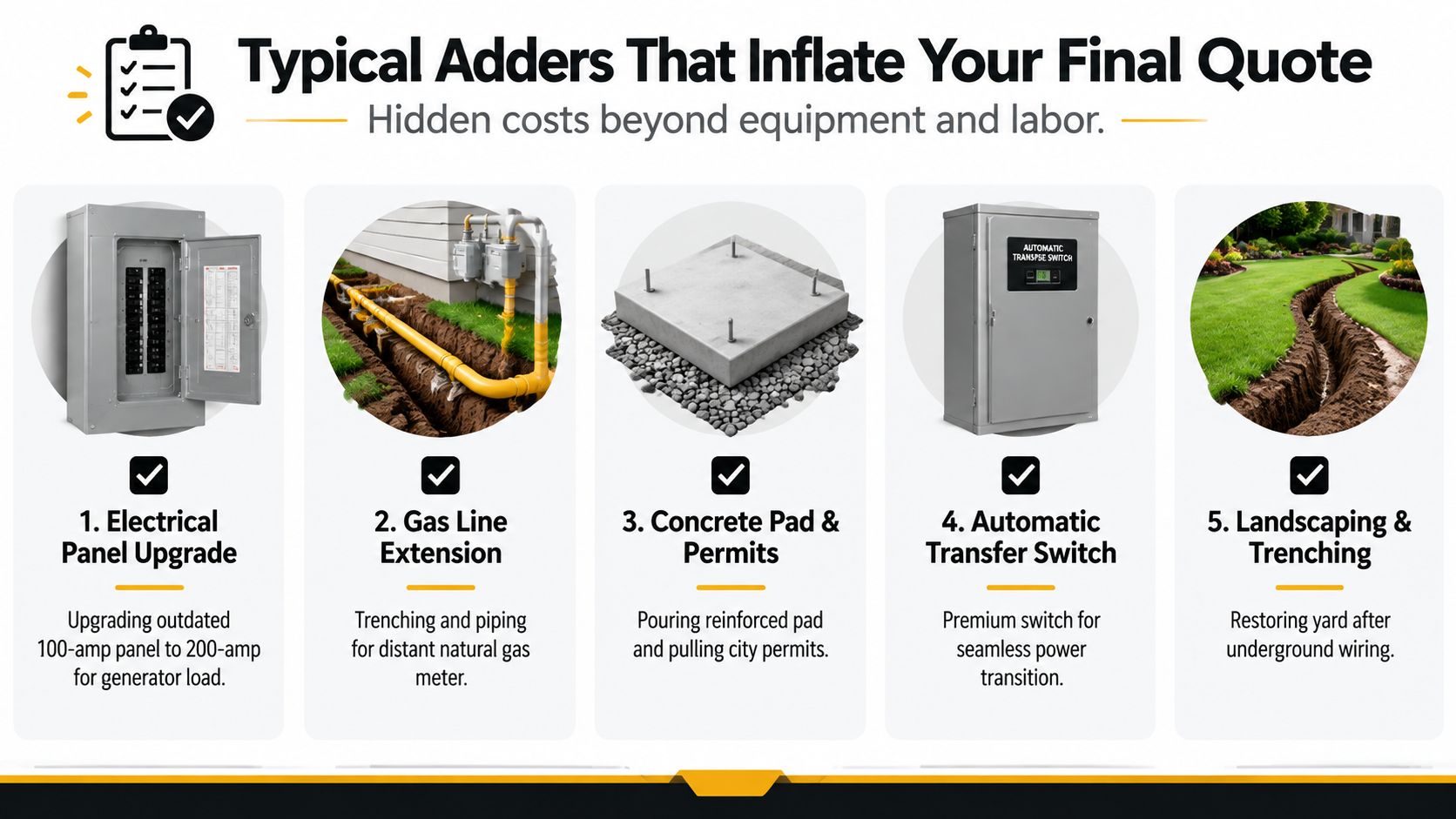
A home with older service equipment may need a panel upgrade before the generator can be connected. Moving from a smaller service configuration to a larger one can affect the panel, breakers, meter equipment, grounding, utility coordination, and inspection scope. Don't approve this line item from a verbal explanation. Ask the installer to identify the existing limitation and the exact correction.
The automatic transfer switch can also create an adder. A larger or service-rated switch may be necessary for the chosen architecture, while managed-load equipment can help control demanding circuits. The proposal should explain whether the switch supports whole-service backup or only selected circuits, and whether the quoted amperage matches your service.
Fuel and site requirements
A 22 kW system may require a gas meter or service capable of delivering its fuel demand. If the existing meter or piping can't support the generator while the home's other gas appliances operate, the utility or gas contractor may need to upgrade the service. That work can sit outside the generator dealer's base installation price.
A distant unit can require trenching, additional pipe, conduit, and restoration of the surrounding area. Poor soil, drainage problems, or an unsuitable installation area may require a custom concrete pad rather than a simpler base. Cold-weather equipment, flood-elevation measures, wind anchoring, noise mitigation, or protective barriers may also apply depending on local conditions.
How to challenge an adder
Ask three questions for every unexpected line:
- What problem does it solve? The answer should identify a capacity, safety, access, or code issue.
- Who requires it? Distinguish the local authority, utility, manufacturer, and contractor recommendation.
- What is included? Confirm labor, materials, permit coordination, testing, and restoration.
A legitimate adder should be specific. “Site complications” is not specific enough. Require a description of the route, material, labor assumption, and trigger that would change the price.
Navigating Regional Variations and Market Shifts
National averages help with early planning, but they do not price your property. Local labor rates, permit procedures, utility rules, soil conditions, weather exposure, and placement standards can change the final invoice substantially.
Coastal jurisdictions may require stronger anchoring or raised equipment. Dense municipalities often enforce tighter placement and noise rules. Rural properties can cost more to connect when the electrical service or fuel source sits far from the preferred generator location. Limited local installer availability can also raise crew rates and extend scheduling.
Why older estimates create bad expectations
Older consumer guidance still places an average near $5,160, but that figure may cover smaller systems or a narrower scope. Current guidance for many typical whole-house standby projects has converged around $10,000 to $18,000, while larger or more complicated installations can exceed $20,000. Use those figures as historical context, not as a promise for your address.
The gap reflects more than inflation. It reflects what buyers now expect from “whole house.” A complete standby project includes automatic transfer equipment, fuel integration, electrical work, permitting, site preparation, and commissioning. An older low estimate may describe a smaller generator or leave major balance-of-system work outside the quoted price.
Regional pricing often changes through those supporting requirements, not the generator cabinet itself. A gas upgrade, longer trench, difficult inspection process, or limited access can add more labor than the equipment selection.
Treat a national average as a screening tool, not a contractor's obligation. Let the site plan and local requirements establish the quote.
Ask installers how they handle permits, utility coordination, fuel-meter capacity, anchoring, placement clearances, and inspection scheduling. Their answers reveal more about local pricing than a generic calculator. Favor the contractor who identifies regional constraints before pricing the job, rather than the one offering a low flat rate without inspecting the property.
Strategies to Compare Quotes and Negotiate Effectively
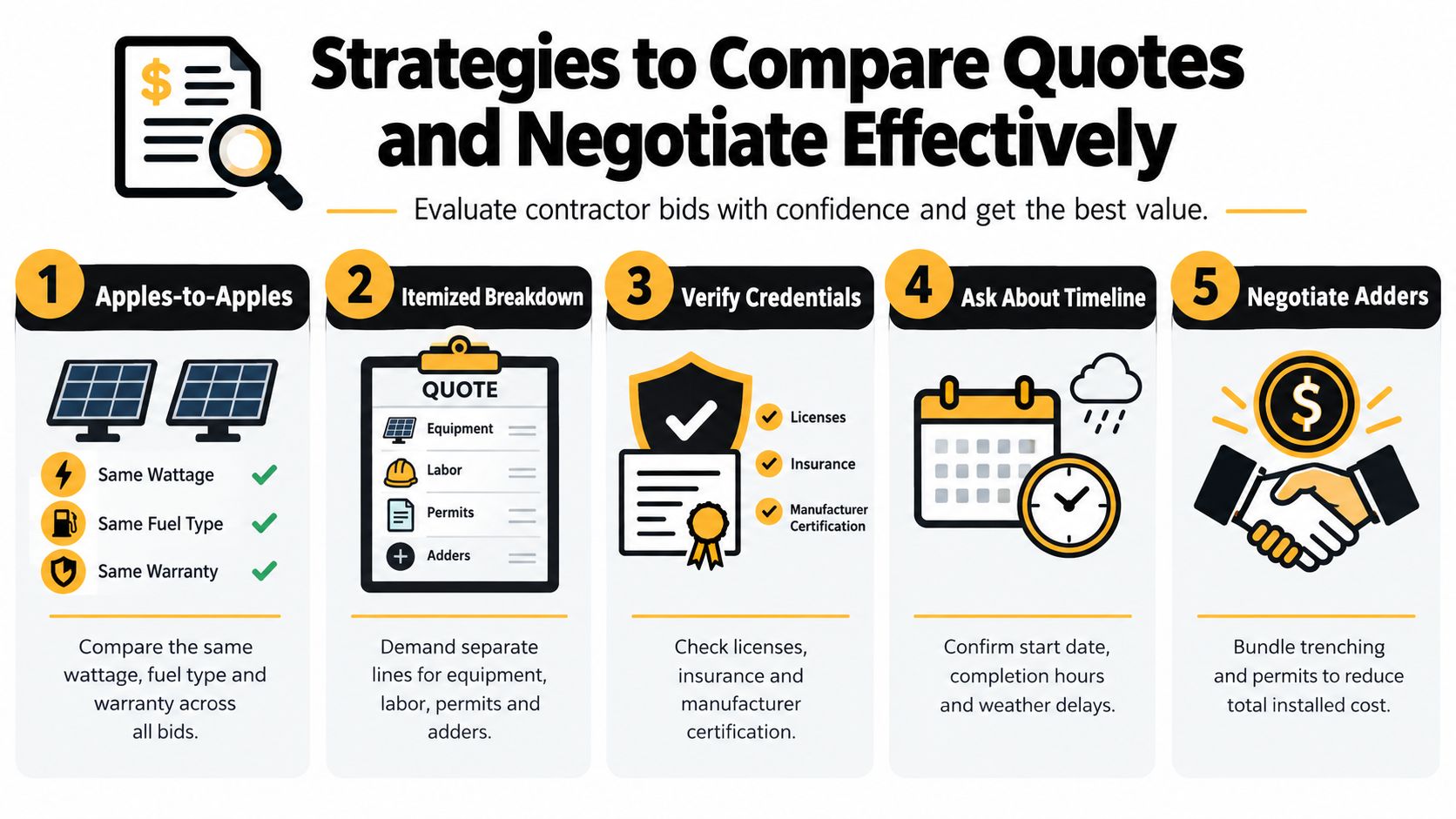
The best quote isn't automatically the lowest quote. It's the proposal that defines the work clearly enough that the final invoice won't depend on guesswork. Compare bids only after confirming they cover the same generator capacity, fuel type, backup architecture, transfer equipment, site work, and commissioning.
Build an apples-to-apples comparison
Create a simple comparison sheet with one row for every major scope item. Record the generator model, transfer switch type, fuel connection, electrical work, pad, permits, inspection, startup testing, warranty registration, monitoring, and cleanup. Mark each item as included, excluded, allowance, or owner responsibility.
A contractor who writes “standard installation included” is asking you to accept ambiguity. Ask what standard means on your property. It should identify assumptions such as short utility runs, accessible panels, suitable soil, available gas capacity, and no required service upgrade.
Use negotiation without compromising safety
You can reduce labor exposure by handling legitimate owner tasks before the crew arrives. Clearing movable items, arranging access, removing decorative obstacles, or coordinating a separate contractor may help. Don't independently trench, alter gas piping, or perform generator wiring unless the responsible licensed professionals have approved the scope and local rules allow it.
- Request a fixed scope: Require written treatment of permits, utility coordination, testing, and restoration.
- Separate optional upgrades: Ask the contractor to distinguish required work from recommended enhancements.
- Challenge allowances: Replace vague site-preparation allowances with a defined route and material assumption.
- Compare labor intelligently: A lower labor figure may exclude panel corrections, fuel work, or final testing.
- Protect the change-order process: Require written approval before extra work begins, except for urgent safety corrections.
Verify the people behind the number
Check licensing, insurance, manufacturer training, and recent standby-generator experience directly. The contractor should be comfortable discussing load calculations, transfer-switch architecture, gas demand, clearances, startup testing, and inspection closeout.
A fair negotiation improves clarity rather than forcing the installer to cut necessary work. Push down uncertainty, not safety standards. The cheapest proposal often becomes expensive when it leaves the most scope undefined.
Finding Verified Installers for Your Specific Project
Hiring the right installer is the strongest protection against an incomplete quote. A general electrician may be excellent at residential wiring yet have limited experience coordinating standby generators, fuel systems, utility requirements, transfer equipment, and manufacturer commissioning. The same applies to HVAC or plumbing contractors who don't regularly manage the full installation.
Start by defining the project before searching. Write down the desired backup approach, likely generator size, fuel source, electrical service, HVAC loads, medical or critical equipment, and any known site restrictions. This gives every installer the same starting information and makes their recommendations easier to compare.
Filter for actual standby experience
Look for installers whose websites clearly discuss whole-house standby systems, automatic transfer switches, generator installation, maintenance, and the brands they support. A page that only mentions portable generators isn't enough evidence for a permanent installation.
Brand alignment matters if you already prefer Generac, Kohler, Cummins, or Briggs & Stratton. It shouldn't override installation quality, service coverage, or scope clarity, but a contractor familiar with the selected platform can simplify warranty registration, parts support, and troubleshooting.
Use a ZIP-based directory to identify nearby candidates, then verify each one yourself. Confirm the license, insurance, manufacturer credentials, service territory, references, permit responsibility, and written scope. A directory can reduce search noise, but it can't replace direct credential checks.
Ask questions that expose weak bids
A serious installer should answer these questions without evasion:
- Who performs the load calculation?
- Which circuits or service loads will the system support?
- What transfer switch and load-management approach are included?
- How will the fuel capacity and piping route be verified?
- Who pulls permits and attends inspections?
- What maintenance and emergency service options are available?
- What conditions would create a change order?
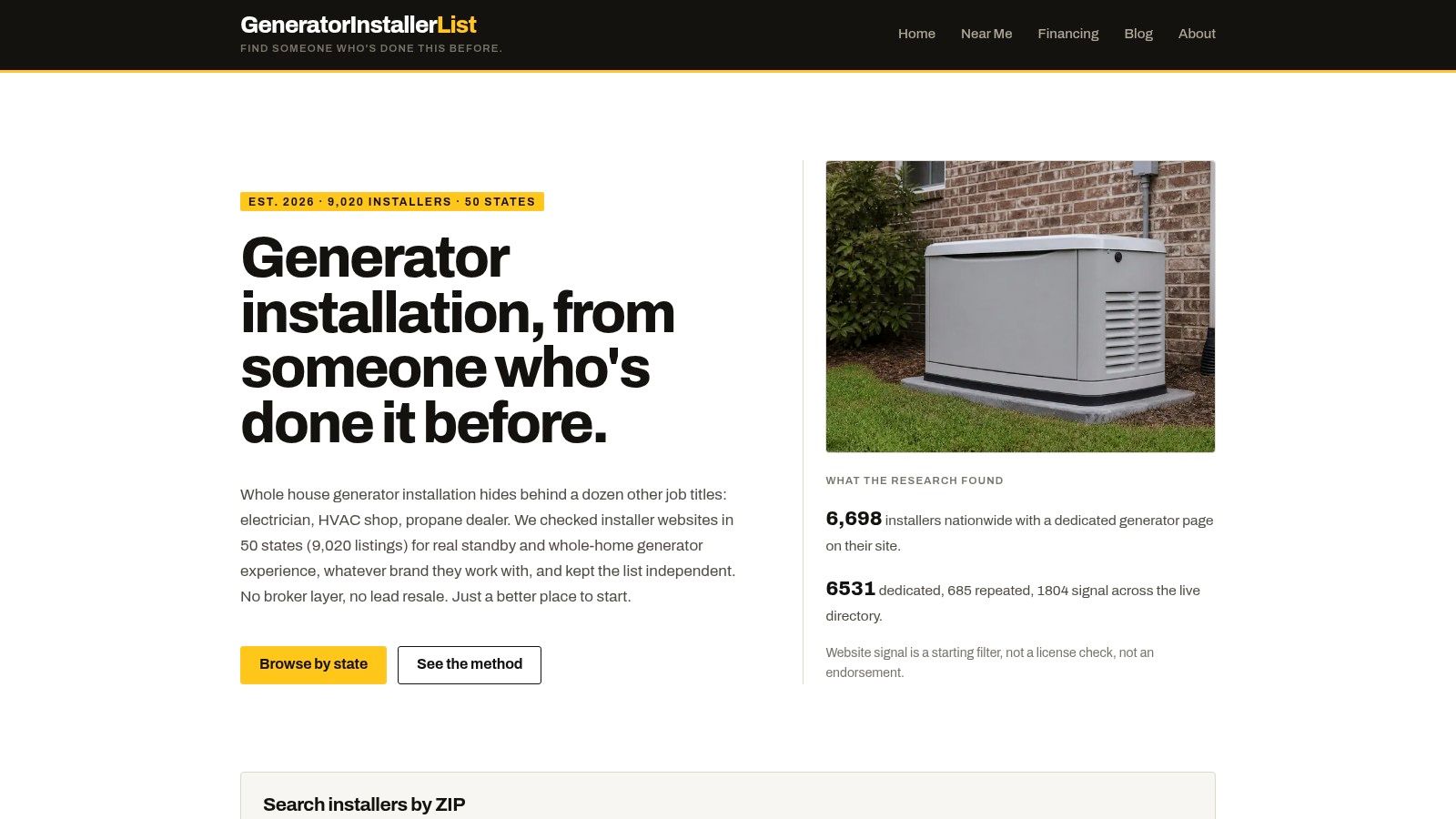
The directory should be treated as a starting point, not an endorsement or licensing authority. Compare several candidates using the same project brief, insist on itemized bids, and select the crew that demonstrates control over the entire balance of system, not just the generator cabinet.
GeneratorInstallerList offers a brand-agnostic directory of standby and whole-house generator installers, with ZIP-based searching and project-focused guidance for comparing equipment, labor, permitting, and adders. Visit GeneratorInstallerList to find relevant local candidates, then verify their credentials and request detailed site-specific quotes before committing.
- whole house generator cost installed
- standby generator pricing
- generator installation labor
- transfer switch costs
- generator quote negotiation
Ready to find who to call?
Open your state page or search by ZIP for a distance-sorted list.