Whole House Generator Dual Fuel Explained for Homeowners
Learn how a whole house generator dual fuel system works, its pros and cons, fuel resilience, and installation tips to keep your home powered reliably.
A storm has knocked out the grid, the house is dark, the refrigerator is warming, and the furnace or heat pump has stopped. Your standby generator starts, but the question is no longer whether it can produce electricity. The more important question is whether its fuel supply will remain available for the entire outage.
That's where a whole house generator dual fuel system can make sense. It can use natural gas or propane, but fuel flexibility alone doesn't guarantee resilience. You also need to consider utility reliability, propane storage, runtime, installation space, maintenance, permits, and the way the system will transfer between fuels.
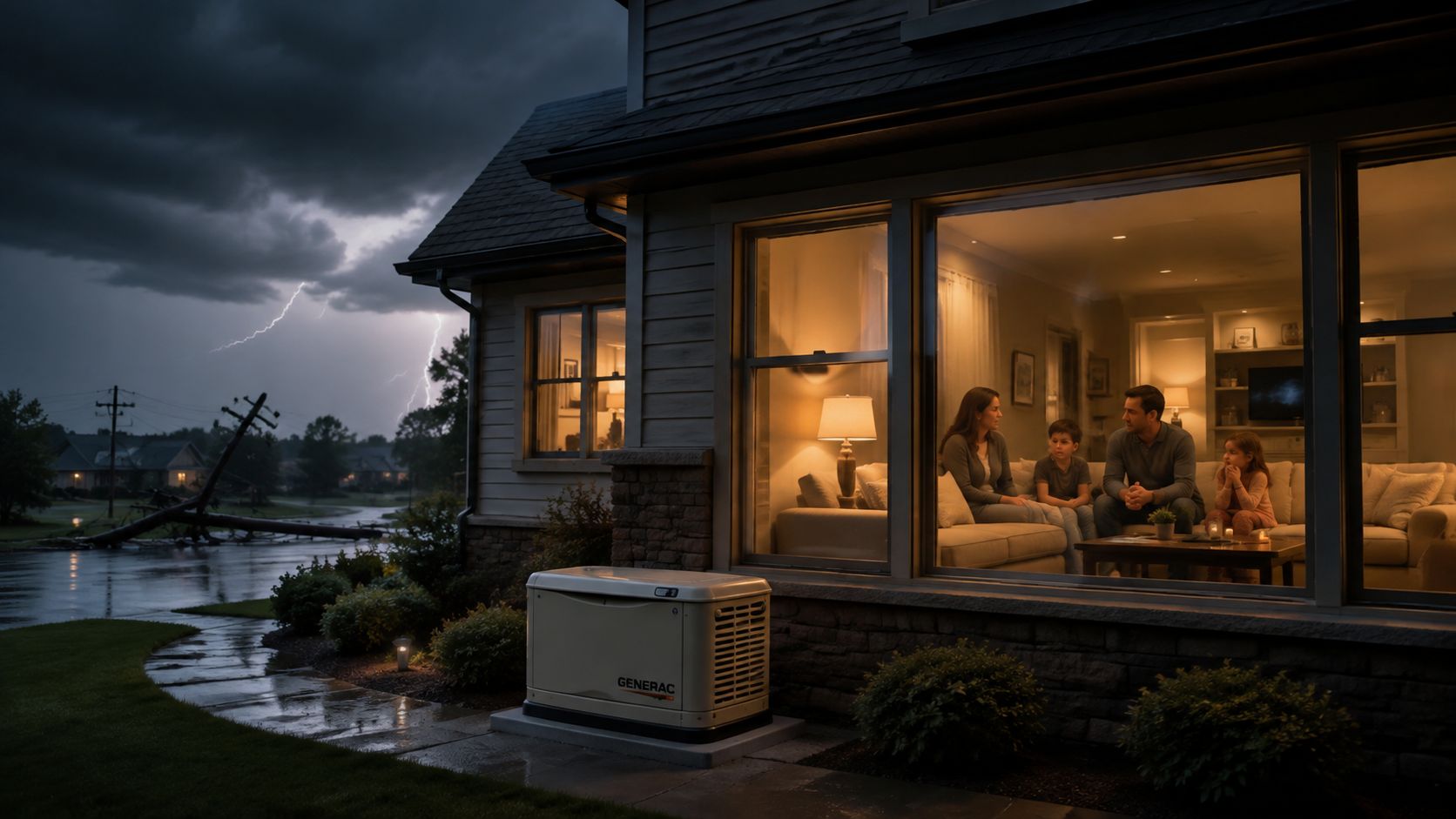
Table of Contents
- When the Lights Go Out and One Fuel Is Not Enough
- How Dual Fuel Whole House Generators Actually Work
- Natural Gas Versus Propane in Real Outage Conditions
- Benefits and Downsides You Should Weigh Honestly
- Installation Planning and What to Ask Your Installer
- Reliability Maintenance and Compliance Considerations
- Choosing If Dual Fuel Is Right for Your Home
When the Lights Go Out and One Fuel Is Not Enough
A family in a suburban home may have natural gas service, an automatic transfer switch, and a standby generator waiting outside. When the electrical grid fails, the system starts without anyone going outdoors. If the gas network continues operating, the generator can keep supplying the home without an onsite fuel tank.
A rural homeowner may face the opposite situation. Propane might already serve the home's heating equipment, but the generator depends on the amount stored in the tank. If the outage lasts longer than expected, the homeowner must think about remaining fuel, delivery access, weather conditions, and the generator's electrical load.
Neither home has made a wrong choice. They have different fuel-resilience problems.
The central question: Which fuel can your home depend on when roads, utility lines, deliveries, or neighborhood infrastructure are under stress?
A dual-fuel system adds another option to that decision. If the generator can operate on natural gas and propane, the controller may start with a preferred fuel and move to the other when the primary supply becomes unavailable or too low. That can reduce dependence on a single source, but it also introduces more equipment, more installation questions, and another fuel system to maintain.
The technology itself isn't new. North American's affiliate companies operated standby diesel projects in the 1990s, including a City of Eaton Rapids, Michigan installation with two Fairbanks Morse Opposed Piston 38 D 8 1/8 units. The units could run on either natural gas or diesel fuel, with the larger rated at 2,000 kW and the other at 1,365 kW, according to North American's project history. That history shows dual-fuel planning has been used for large reliability projects, not only residential equipment.
This guide starts with the mechanics, then compares natural gas and propane during real outages. It also covers ownership trade-offs, installation questions, maintenance, compliance, and the situations in which dual fuel is or isn't a sensible fit.
How Dual Fuel Whole House Generators Actually Work
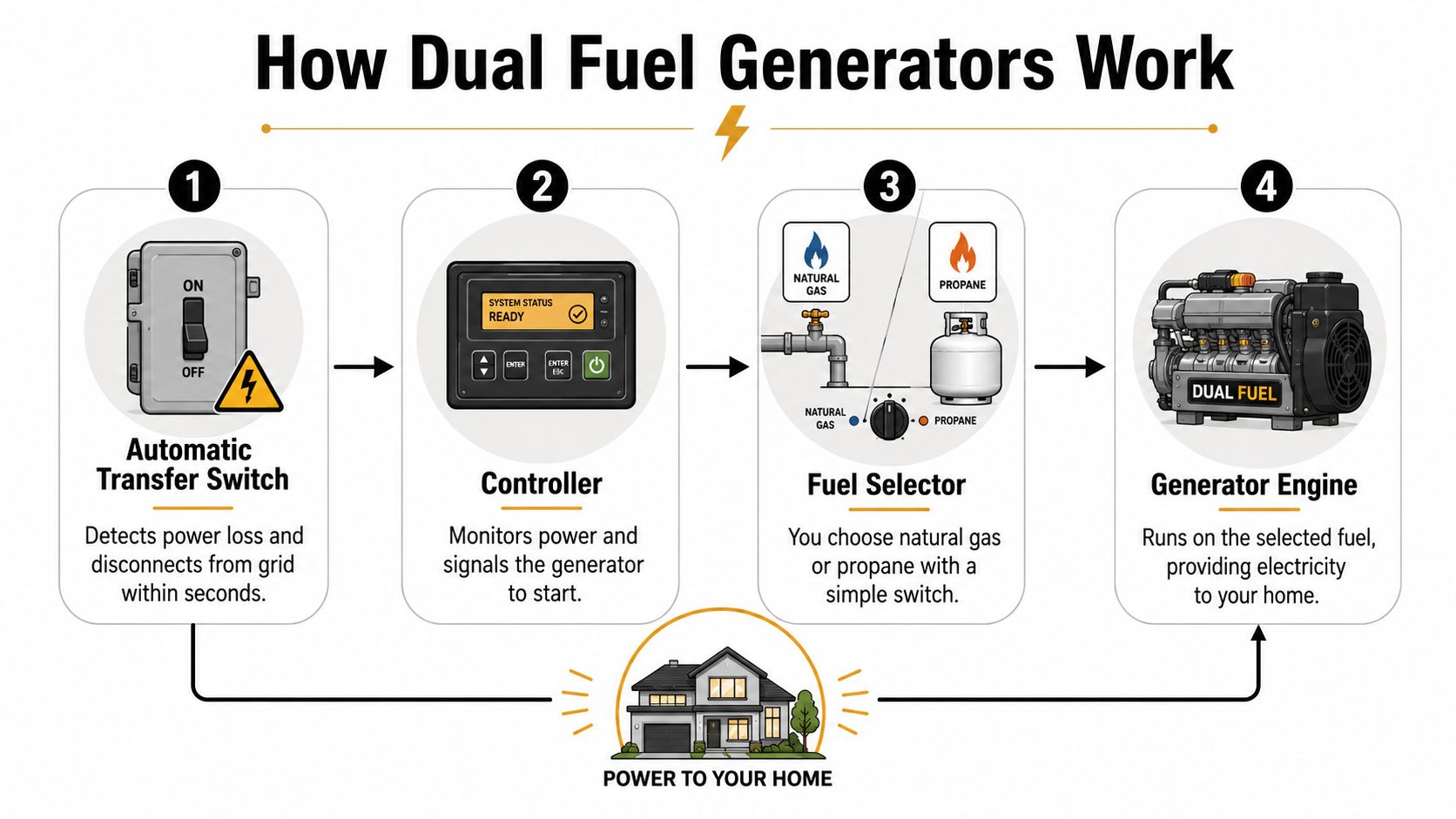
A whole-house standby generator is connected to the home's electrical system rather than plugged into individual appliances. An automatic transfer switch monitors utility power. When it detects an outage, it separates the home from the grid and signals the generator to start, helping prevent dangerous backfeeding into utility lines.
A dual-fuel model adds a fuel-management layer. A vehicle can use two fuel sources, but here the generator's controller manages the changeover while the engine continues serving the electrical system. The exact behavior depends on the equipment and installation, so the installer should explain whether the change is automatic, manual, or limited to a particular operating condition.
The operating sequence
The transfer switch detects lost grid power. It disconnects the home from the utility supply and prepares the backup system.
The controller starts the generator. The controller coordinates the start sequence and checks whether the unit is operating properly.
The fuel selector identifies the available source. Depending on the model, the primary source may be natural gas, with propane available as the alternate. Some systems require a homeowner or technician to select the fuel, while others use automatic logic.
The engine produces electricity for the home. The generator supplies the circuits included in the installation. It may power the whole panel, or the installer may use load management to prioritize large electrical equipment.
Industrial generator documentation describes NG/LP operation in which the controller starts on the primary fuel, switches to LPG when that supply is low, and can restart on the primary fuel afterward. This kind of automatic transfer logic is documented in Rehlko's generator technical material.
Whole-house standby versus portable dual fuel
The phrase “dual fuel generator” can describe very different products. A portable unit may run on gasoline and propane and require manual placement, connection, refueling, and supervision. A whole-house standby system is installed outdoors, wired into the home, and designed to respond automatically to a utility outage.
That difference affects sizing, safety, fuel connections, and expectations. A portable dual-fuel generator may support selected appliances through extension cords or a transfer setup. A whole-house system requires a load calculation, permanent fuel piping, electrical integration, approved clearances, and local inspections.
The fuel selector is only one part of the system. The transfer switch, controller, engine, wiring, gas pressure, propane regulator, and load-management settings all have to work together.
Natural Gas Versus Propane in Real Outage Conditions
A suburban home with an established gas connection may keep its generator supplied without storing fuel onsite. That convenience lasts only while the utility network operates with sufficient pressure and capacity. If the network is interrupted, the generator cannot draw on an empty or unavailable service line.
Propane changes the logistics. Fuel is stored at the property, so the generator is less dependent on the natural-gas distribution network during an outage. The trade-off is preparation: the tank needs suitable space, safe placement, inspection, adequate fuel, and delivery access.
| Factor | Natural Gas | Propane |
|---|---|---|
| Availability | Convenient where the home already has dependable gas service | Useful where propane service and storage are already established |
| Storage | No onsite tank is required | Requires an onsite tank with adequate capacity |
| Outage resilience | Depends on the utility connection and network operation | Depends on stored fuel, tank condition, and delivery access |
| Runtime planning | Supply is tied to the gas service rather than a household tank | Runtime depends on stored fuel and generator demand |
| Installation focus | Gas-line capacity, pressure, routing, and permits | Tank placement, regulator, piping, clearances, and permits |
| Cost trade-off | Avoids routine tank management, but local rates and service conditions matter | Adds storage and delivery considerations, with fuel pricing varying by location |
This distinction matters most when fuel delivery or utility access is uncertain. A rural home may have limited or no natural-gas service, making propane the practical primary fuel. A home in a serviced neighborhood may prefer natural gas because it avoids tank monitoring, while still using propane as a stored backup.
Permit complexity follows the fuel arrangement. Natural-gas installation centers on line capacity, pressure, routing, and required approvals. Propane planning adds tank location, regulator specifications, clearances, piping, inspection, and delivery access. The fuel choice therefore affects both outage resilience and the work required before the generator can operate.
Electrical demand also changes the result. A generator serving refrigeration, heating, pumps, lighting, and other large equipment uses fuel differently from one serving only selected circuits. Ask the installer for expected consumption at your planned load. A tank size or utility connection that seems adequate on paper may provide a different runtime when several appliances operate together.
For a side-by-side buyer discussion, review this guide to natural gas versus propane generators.
The global dual-fuel generator market was estimated at US$863.1 million in 2023 and is projected to reach US$1.1 billion by 2030, implying a 2.9% CAGR from 2023 to 2030, according to GII Korea's market summary. That commercial outlook shows continued interest in fuel flexibility, but it cannot determine which source will remain dependable at your address.
Benefits and Downsides You Should Weigh Honestly
During a winter outage, the utility gas line remains available, but propane deliveries may be delayed by snow. In another home, the propane tank is full while utility service is interrupted. A dual-fuel whole-house generator helps only when its two fuel paths match the failures and delivery problems your property is likely to face.
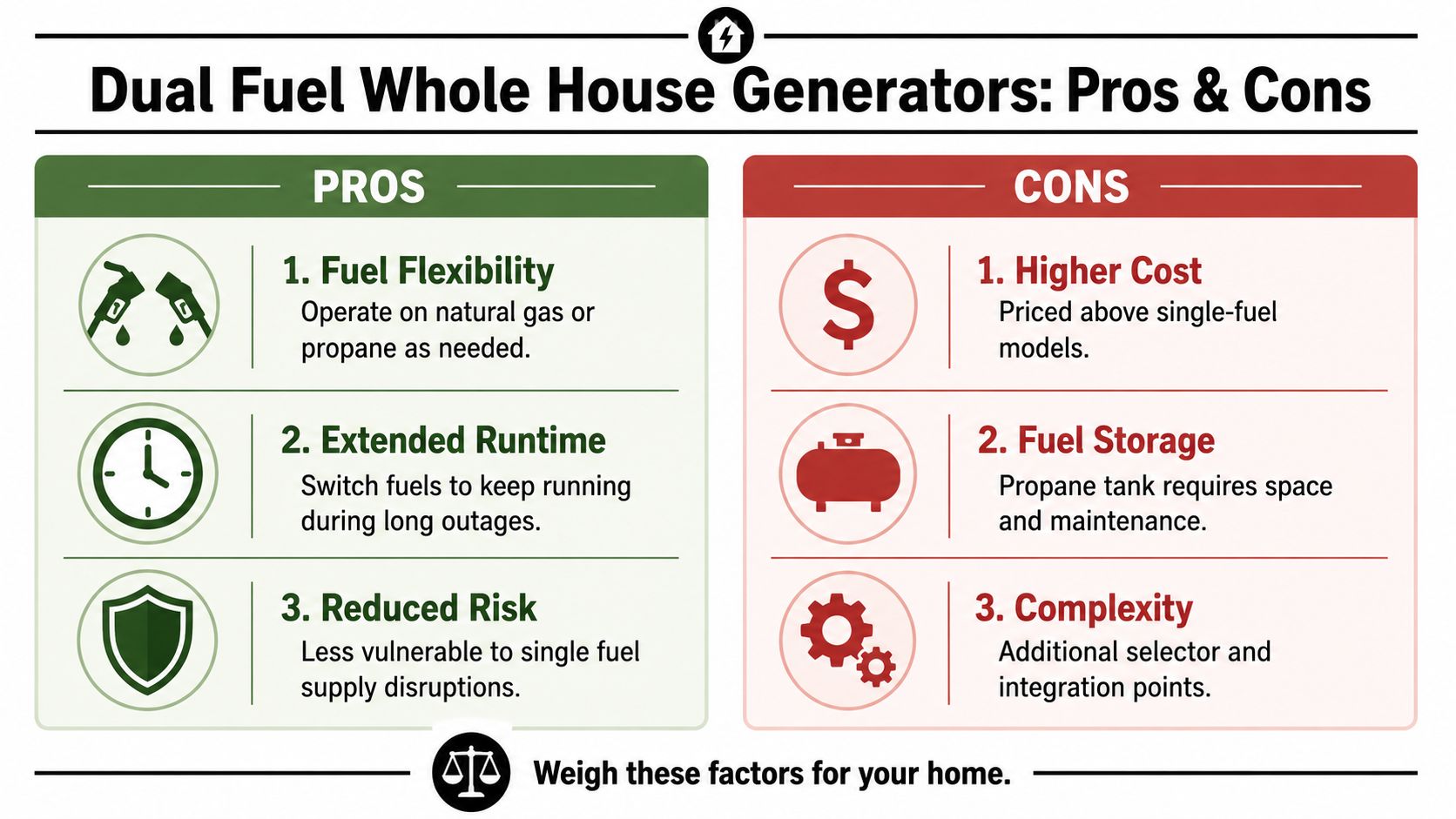
The main benefit is fuel resilience, not fuel variety by itself. A natural-gas-first system can reduce tank management during ordinary outages. Propane provides an onsite reserve when utility service, pressure, or access becomes uncertain. For a home prepared for both sources, that second path can extend outage planning and reduce dependence on one supply.
The choice also affects logistics. Natural gas may simplify storage, but the connection can involve utility capacity, routing, pressure checks, and approvals. Propane avoids reliance on that line, yet requires tank space, a suitable regulator, delivery access, clearances, and inspections. These requirements can make a dual-fuel setup more complicated to permit than a system using one already-approved fuel source.
What ownership may feel like
The upside is flexibility. You may have more options during an extended outage, particularly when one fuel is stored onsite and the other reaches the property through a utility connection.
The cost is integration. A dual-fuel installation may need added controls, fuel components, piping, regulators, and commissioning. The generator price is only one part of the budget. Include site preparation, electrical and fuel work, permits, inspections, and future service.
The maintenance work is broader. Service should cover the engine and electrical controls, plus the fuel selector, connections, regulators, valves, and automatic transfer logic. Each added interface is another part that requires inspection and testing.
Performance can differ by fuel and load. The generator may not produce identical results on both sources. Ask for the manufacturer's approved fuel requirements and have the installer explain how capacity, pressure, and consumption change between fuels.
Resilience and simplicity are different goals. Dual fuel can reduce dependence on one supply, while a single-fuel system may be easier to install, service, and understand when one fuel source is exceptionally dependable.
Choose according to the failure you are trying to prevent. If utility gas is the weak point, onsite propane may provide the stronger reserve. If winter deliveries are difficult and natural gas is dependable, a gas-first system may involve fewer storage and access concerns.
Installation Planning and What to Ask Your Installer
Start with the home, not the generator model. List the equipment you expect to operate during an outage, such as refrigeration, heating or cooling, a sump pump, well equipment, lights, communications equipment, and medically important devices. A licensed professional should turn that list into a load calculation and explain whether the installation will support the whole panel or use managed priority loads.
Ask these questions before accepting a quote
How was the size selected? Ask which starting loads were included and how the system will handle large motors, compressors, pumps, or electric heating equipment.
Can the fuel supply support the unit? For natural gas, ask whether the existing line has sufficient capacity and pressure. For propane, ask where the tank and regulator will go, how deliveries will reach the property, and how the installer will plan for the expected load.
What happens during fuel changeover? Confirm which source starts the generator, what condition triggers a switch, whether the process is automatic, and how the system returns to the preferred fuel.
Which circuits receive power? A “whole-house” label doesn't replace a load review. Clarify whether the generator supports every circuit or whether load management will temporarily limit selected equipment.
What clearances apply? The location must account for windows, doors, property boundaries, exhaust, noise, service access, and the fuel tank or piping arrangement.
Who handles permits and inspections? Fuel choice can affect electrical, building, gas-line, LP-tank, and air-quality requirements. The installer should identify the responsible party for each approval.
How will service work? Ask about exercise settings, oil and filter service, battery checks, controller testing, emergency response, warranty coverage, and access for future repairs.
Before comparing proposals, use a structured list of questions to ask a generator installer. A clear answer is more useful than a vague promise that the system will “run the whole house.”
Reliability Maintenance and Compliance Considerations
A dual-fuel generator is only resilient if it starts when needed and receives the fuel the engine expects. Regular exercise operation gives the system an opportunity to reveal weak batteries, starting problems, controller faults, or unusual engine behavior before an emergency.
Maintenance should cover more than oil and filters. The service plan should address fuel lines, shutoff valves, regulators, propane connections, natural-gas pressure, the transfer switch, battery condition, wiring, exhaust areas, and the automatic changeover sequence. If the system has a primary and alternate fuel, ask the technician to test both operating paths according to the manufacturer's procedures.
A useful service conversation includes:
- Start testing: Does the engine start reliably and reach stable operation?
- Transfer testing: Does the switch move the home between utility and generator power correctly?
- Fuel-path inspection: Are both fuel supplies connected, labeled, and protected?
- Controller review: Are alarms, settings, and changeover functions operating as intended?
- Site inspection: Are exhaust, vegetation, access, tank surroundings, and piping still acceptable?
More maintenance guidance, including warranty questions, is available in this generator maintenance and warranty guide.
Compliance can change the project
Dual fuel isn't automatically the simplest or cleanest installation. Stationary engines and dual-fuel equipment fall within emissions-regulated categories, and local authorities may apply requirements based on the fuel arrangement, equipment type, site, and jurisdiction. The EPA stationary-engine material provides the relevant regulatory context.
Permitting guidance for residential generators also indicates that fuel selection can change the number and type of approvals required. A project may involve electrical and building permits, while a gas or propane arrangement can add gas-line, LP-tank, zoning, setback, noise, or air-quality questions.
Ask the installer to put every permit assumption in writing. “The equipment is approved” doesn't necessarily mean the proposed location and fuel installation are approved.
The equipment has a documented reliability history, including the earlier large-scale North American projects, but proven technology still needs correct commissioning and ongoing care. Treat compliance as part of reliability planning, not as paperwork to handle after the generator is selected.
Choosing If Dual Fuel Is Right for Your Home
Dual fuel is a strong candidate when your home can support two practical fuel paths and the added installation complexity solves a real risk. That may describe a rural property with propane storage and uncertain utility access, or a home with natural gas service that wants an onsite alternative for severe outages.
A single-fuel standby generator may be the better fit when one fuel is consistently available, the installation site is constrained, or the second fuel would add cost and permitting work without meaningfully improving resilience. Simplicity has value, especially when local service support is limited.
Use this decision filter:
- Start with availability. Which fuels can reach your property?
- Check resilience. Which supply is more likely to remain usable during the outages you experience?
- Review storage. Can you place, maintain, and refill a propane tank if needed?
- Match the load. Will the selected fuel arrangement support the equipment you need?
- Price the complete project. Include equipment, fuel work, electrical integration, permits, maintenance, and future service.
- Verify the installer. Ask for evidence of experience with automatic transfer systems and dual-fuel commissioning.
The best conversation with an installer won't begin with a brand name. It will begin with your fuel access, outage concerns, essential loads, property layout, and willingness to manage a second fuel system.
If you're comparing dual-fuel options, visit GeneratorInstallerList to find installers with visible standby or whole-house generator experience, then use the site's buyer guides to prepare focused questions about sizing, fuel supply, permits, service, and warranty coverage. Contact several qualified candidates and ask each one to explain how their proposed system would keep your specific home operating when one fuel source becomes unreliable.
- whole house generator dual fuel
- dual fuel generator
- whole house generator
- standby generator
- generator installation
Ready to find who to call?
Open your state page or search by ZIP for a distance-sorted list.